


 ₹https://medical-stores.chemistbox.in/chemist-box/-in-patna/-in-rupaspur/chemist-box-in-rupaspur-patna--2bQBwa/articles/antifungal-creams-skin-infection-care-at-a-pharmacy-in-rupaspur-patna-ringworm-itching-monsoon-skin-problems--a716711c-03e6-4c82-8b3e-b98a0d5237de
Chemist Box, Rupaspur, patna
No 88, Aryan Complex, Gola Road, Rupaspur, patna, bihar - 801503
Chemist Box Social Feeds in Rupaspur, patna
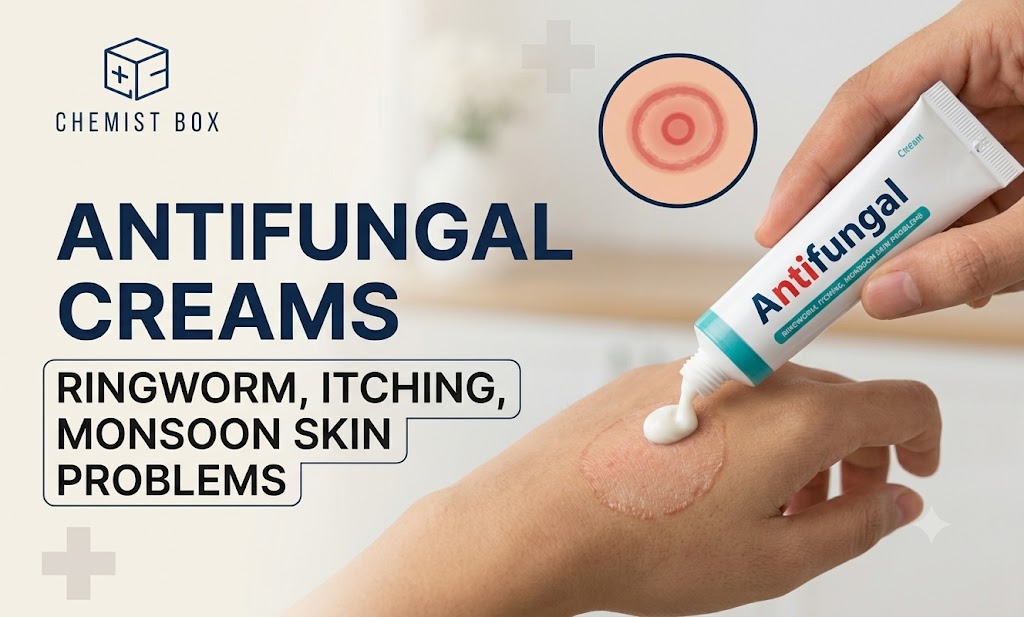
Antifungal Creams & Skin Infection Care at a Pharmacy in Rupaspur, Patna: Ringworm, Itching & Monsoon Skin Problems
Fungal skin infections have become one of the most common reasons people walk into a pharmacy in Rupaspur, and one of the hardest problems to actually get rid of.
The pattern is familiar. An itchy ring appears on the thigh, waist or groin. Someone buys a cream, and within two days the itching stops and the redness fades. Everyone relaxes. Three weeks later it is back, bigger, spreading, and now two other people at home have it as well.
There is a specific reason this keeps happening in India, and it is not bad luck. A large part of it comes down to the type of cream people are sold, and it is worth understanding properly, because it is the difference between clearing an infection in a few weeks and fighting it for a year.
This guide covers what fungal skin infections are, why the wrong cream makes them worse, what actually helps, and when a pharmacy is not enough. Your Chemist Box store in Rupaspur, Patna can advise you, but the honest headline is that a spreading or stubborn fungal infection needs a doctor rather than another tube.
Why the Monsoon Makes It Worse
Fungus thrives in warmth and moisture, which is exactly what Indian humidity provides for several months a year.
Add damp clothes that never fully dry, closed shoes worn through wet days, sweat trapped under tight synthetic clothing, and shared towels at home, and you have close to ideal conditions. This is why fungal complaints at the counter rise sharply in the monsoon and stay high through humid weather.
The Common Fungal Skin Problems
Despite the name, ringworm has nothing to do with worms. It is a fungal infection of the skin, and the ring shape is simply how it spreads outward.
Two of these are worth flagging early. Scalp and nail infections do not respond properly to creams. They generally need oral medication prescribed by a doctor, often for weeks or months, so a cream from the shelf will not fix them no matter how long you persist.
The Combination Cream Problem
This is the most important section on this page, and if you read nothing else, read this.
What Is Happening
Many creams sold over the counter in India are fixed-dose combinations containing a potent steroid alongside an antifungal, and sometimes an antibiotic too. They are cheap, widely available, and they work spectacularly for about three days.
That is precisely the problem.
The steroid suppresses inflammation, so the itching and redness disappear quickly. It feels like a cure. But the steroid also suppresses the local immune response in the skin, which lets the fungus spread more freely underneath. The infection often comes back larger, with a less typical appearance that is harder to diagnose, and considerably harder to treat.
Dermatology bodies in India have raised repeated concerns about these combination creams, linking their widespread misuse to a rise in stubborn, recurrent fungal infections that resist standard treatment. It is now common for patients to arrive at a dermatologist having used several such creams over months.
What This Means for You
Do not buy a cream because a relative, neighbour or shopkeeper says it worked fast. Fast is the warning sign here, not the recommendation.
Ask what is in it. A plain antifungal cream contains an antifungal. If the ingredient list also includes a steroid, that is a different product with different consequences.
Ask the pharmacist at your Chemist Box counter to check the composition before you buy. This is exactly the kind of question the counter should be answering.
Do not use a leftover tube from someone else's prescription, since you have no idea what it contains.
Steroid creams do have legitimate uses, prescribed by a doctor for the right condition. Used on a fungal infection without supervision, they cause harm.
If You Have Already Been Using One
Do not simply stop and switch on your own if you have been using a potent steroid cream on a large area for a long time, since skin can react on withdrawal. See a doctor, tell them exactly what you have been using and for how long, and let them plan it. Take the tube with you. That single piece of information saves a lot of guesswork.
Using a Plain Antifungal Cream Properly
For a small, straightforward, first-time patch, a plain antifungal cream may be appropriate. Most treatment failures come from how it is used rather than the product itself.
The Rules That Actually Matter
Apply a thin layer beyond the visible edge. The fungus extends further than the rash you can see, so cover a few centimetres of surrounding normal-looking skin.
Use it for the full duration stated, not until it looks better. This is the single biggest mistake. Most courses continue for a couple of weeks after the skin appears normal, and stopping early is why it returns.
Apply as directed each day, consistently. Skipped days extend the whole course.
Wash and dry the area thoroughly before applying.
Wash your hands before and after, since the infection transfers easily to other body parts.
Do not cover it tightly with a bandage or tight clothing unless told to.
Treat the feet too. In many cases the infection travels from the feet to the groin and body, so treating one site while ignoring the other guarantees a return.
If It Is Not Working
See a doctor rather than switching to a stronger-sounding cream if:
There is no improvement after about two weeks of correct use
It clears and returns repeatedly
It keeps spreading despite treatment
A dermatologist can confirm what it actually is, since not every itchy ring-shaped patch is fungal. Eczema, psoriasis and other conditions can look similar, and they need entirely different treatment. Guessing is what turns a two-week problem into a two-year one.
Antifungal Powders and Soaps
Powders are useful for prevention and for keeping areas dry, particularly in shoes, socks and skin folds. They are not a substitute for a cream on an active infection, but they help stop recurrence once it has cleared.
Medicated soaps and shampoos have a role, usually alongside proper treatment rather than instead of it. For scalp problems in particular, a shampoo alone is rarely sufficient.
The Household Part Nobody Does
Fungal infections spread within families through shared items, and this is why one person keeps getting reinfected after successful treatment.
Do not share towels, clothes, footwear, combs, razors or bedsheets. Everyone gets their own towel, hung separately to dry properly.
Wash clothes, towels and bedsheets for anyone affected, and dry them fully. Damp storage undoes everything.
Change underclothes daily, and more often in heavy sweating.
Check everyone at home, including children, for itchy patches. Treating one person while another carries it means it circles back.
Check pets if anyone has a scaly patch, since ringworm can pass between animals and people.
Do not sit on a bare shared surface at the gym without a towel, and wear slippers in shared bathrooms.
Treating the household and the environment together is what breaks the cycle. Treating one patch on one person rarely does.
Prevention: Keeping Skin Dry
Almost all of it comes down to moisture.
Dry thoroughly after every bath, especially between the toes, in the groin, under the breasts and in any skin fold. Pat, do not rub hard.
Change out of wet or sweaty clothes promptly, including gym wear, and never wear the same damp clothes twice.
Wear loose cotton clothing rather than tight synthetics in humid weather.
Rotate your shoes so each pair dries fully, and use an antifungal dusting powder inside them.
Wear open or quick-drying footwear on wet days.
Wash and dry socks properly, and change them daily.
Avoid scratching, which spreads the infection to other body parts and can cause a secondary bacterial infection.
Not Everything Itchy Is Fungal
Buying an antifungal cream for a rash that is not fungal is common and unhelpful.
Scabies is worth singling out, because it is frequently mistaken for a fungal problem. Intense night-time itching affecting several people in the same house points to it, and it needs specific treatment for everyone in the household at once.
When to See a Doctor Rather Than Buy a Cream
The rash is spreading, or covers a large area
It has not improved after about two weeks of proper treatment
It keeps coming back after clearing
It involves the scalp, face, nails or genitals
It is painful, weeping, crusted, or has pus
There is fever alongside the rash
The person has diabetes, is on steroids or immunity-lowering medicines, or has any condition affecting immunity
The person is pregnant or breastfeeding
It is a child, particularly with a scalp patch
You have already used a combination or steroid cream on it
A Specific Note on Diabetes
If you have diabetes, take skin infections seriously and early, particularly on the feet. Healing is slower, infections spread more readily, and what looks like simple itching between the toes can become a much larger problem. Do not self-treat a foot infection, and get any crack, sore or persistent rash on the feet looked at promptly.
Poorly controlled blood sugar also makes fungal infections more likely and more stubborn, so recurrent infections are worth mentioning to your doctor as part of the bigger picture.
Finding Skin Care Products at a Chemist Box Pharmacy in Rupaspur
Formulations and pack sizes vary between stores, so a quick check saves a trip across Patna.
Use the store locator on chemistbox.in. Enter your locality, city or pincode and you will see the Chemist Box stores near you with the address, phone number, opening hours and a map link for directions.
Three things worth doing at the counter:
Ask what is in the cream. Specifically, ask whether it contains a steroid. This is the most useful question in this whole category.
Describe where it is and how long it has been there, since scalp, nails, face and groin change the answer.
Take your prescription if a dermatologist has specified a product, and read out the exact name and strength rather than accepting something similar.
Frequently Asked Questions
Why does my ringworm keep coming back? Usually one of four reasons: the cream was stopped as soon as the rash looked better rather than completing the full course, only the visible patch was treated instead of the surrounding skin, the household kept reinfecting itself through shared towels and clothes, or a steroid-containing combination cream was used, which suppresses symptoms while the fungus spreads. If it has returned more than once, see a dermatologist.
Are combination creams with a steroid bad for fungal infections? Used without medical supervision, yes. The steroid clears the itching and redness fast, which feels like it is working, but it also weakens the skin's local defences and lets the infection spread further and become harder to treat. Dermatology bodies in India have repeatedly raised concerns about the misuse of these creams. Ask the pharmacist to check the composition before you buy.
How long should I use an antifungal cream? For the full duration stated on the product or by your doctor, which usually means continuing for a week or two after the skin looks normal. Stopping when the rash disappears is the commonest reason infections return. If there is no improvement after about two weeks of correct use, see a doctor rather than switching creams.
Can a cream treat a fungal nail or scalp infection? Generally not on its own. Nail and scalp infections usually need oral medication prescribed by a doctor, often for several weeks or months. Persisting with a cream for these wastes time and lets the infection establish further.
How do I stop it spreading to the rest of my family? Stop sharing towels, clothes, footwear, combs and bedsheets, wash and fully dry the affected person's laundry, check everyone at home for itchy patches, and treat all affected members together. Also treat the feet even if the visible patch is elsewhere, since feet are a common source.
Is every itchy ring-shaped rash a fungal infection? No. Eczema, psoriasis, contact reactions and scabies can look similar and need completely different treatment. Intense itching that is worse at night and affects several people at home points more towards scabies. If a rash does not respond to correct antifungal treatment, get it examined rather than trying stronger creams.
Conclusion
Fungal skin infections are simple in principle and difficult in practice, and almost all the difficulty comes from three things: using a steroid-containing combination cream that clears symptoms while worsening the infection, stopping treatment as soon as the rash fades, and ignoring the household side of it.
Get those three right, keep the skin dry, and most straightforward cases settle. Get them wrong and the same patch will follow you around for a year.
The single most useful habit is asking what is in the tube before you buy it. Walk into a Chemist Box pharmacy in Rupaspur, Patna, describe where the rash is and how long it has been there, and ask the pharmacist to check the composition. If it needs a dermatologist, that is worth knowing early rather than after the fourth cream.
Use the store locator on chemistbox.in to find the Chemist Box pharmacy nearest you in Rupaspur, Patna, ask the pharmacist to check what is in any cream before you buy it, and get a spreading or recurring skin infection seen by a doctor.