


 ₹https://medical-stores.chemistbox.in/chemist-box/patna/rupaspur/chemist-box-in-rupaspur-patna--2bQBwa/articles/protein-powder-sports-nutrition-at-a-medical-store--a72c1c18-bc4f-49da-93fd-220934cc845c
Chemist Box, Rupaspur, patna
No 88, Aryan Complex, Gola Road, Rupaspur, patna, bihar - 801503
Chemist Box Social Feeds in Rupaspur, patna
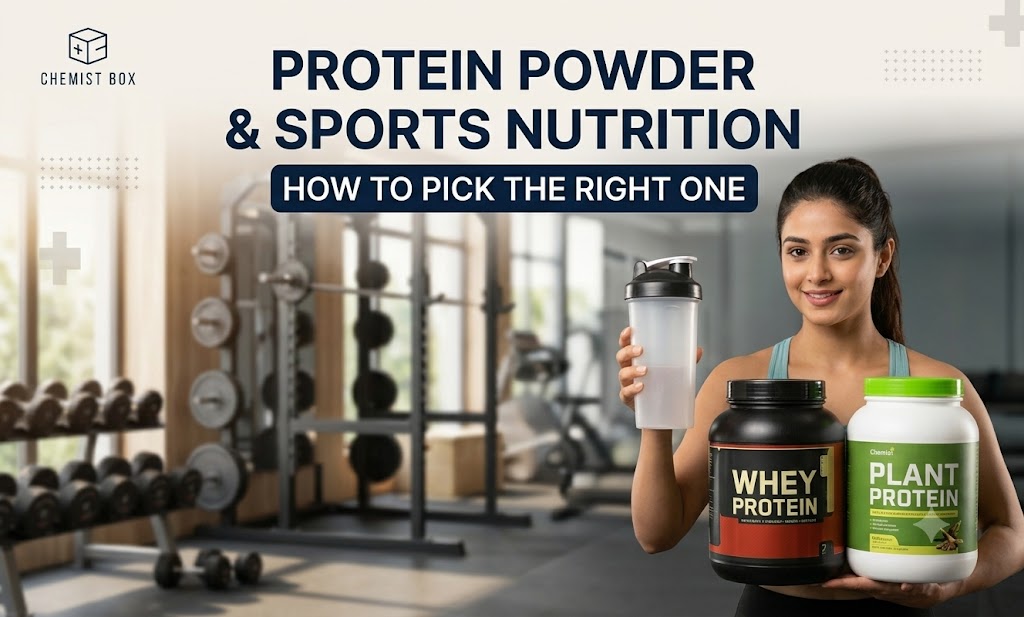
Protein Powder & Sports Nutrition at a Medical Store in Rupaspur, Patna: Whey, Plant Protein & How to Pick the Right One
Protein powder has moved out of the gym and onto the pharmacy shelf. In any medical store in Rupaspur you will now find whey tubs beside plant protein pouches, mass gainers, recovery drinks and clinical nutrition powders for elderly patients, all making broadly similar promises in very different packaging.
Two groups of people usually stand in front of that shelf. Someone who has started training and has been told they need protein. And someone buying for a parent who is recovering from illness and not eating much. Their needs overlap far less than the marketing suggests.
This guide explains who genuinely benefits from a protein supplement, the real differences between whey and plant options, how to read a label properly, and what to check before buying, which matters more in this category than most because of the quality problems in the Indian supplement market. Your Chemist Box store in Rupaspur, Patna stocks most of these products, and the pharmacist can help you match one to the actual purpose.
Food First, Supplement Second
Worth saying plainly at the start: most people who eat reasonably do not need a protein powder.
Dal, rajma, chana, paneer, curd, milk, eggs, chicken, fish, soya, peanuts and mixed grains all supply protein, and a diet built around them covers what most people require. A powder is a convenience, not a nutritional category of its own.
Where a supplement genuinely helps is when getting enough from food is difficult, which is a real situation for several groups rather than a marketing claim.
Who Genuinely Benefits
Who Usually Does Not Need One
Someone who exercises a few times a week and eats normal meals
Anyone hoping a powder will replace training or a balanced diet
Someone buying it because it is popular rather than for a reason they can state
If you cannot say what problem you are solving, that is a reason to pause before buying.
The Older Adult Case, Which Gets Overlooked
This is the most useful and least discussed use of protein at a pharmacy counter.
Muscle mass declines with age, and that decline contributes directly to weakness, falls, slower recovery from illness and loss of independence. Older adults often eat smaller meals, have dental problems, or lose interest in food, which makes adequate protein harder to achieve.
For an elderly parent recovering from an illness or a hospital stay, a protein or clinical nutrition supplement can be genuinely valuable. Two points to get right:
It supplements meals, it does not replace them, unless a doctor or dietitian has said otherwise
Protein alone does not build strength. Gentle resistance activity, as advised by a physiotherapist, is what turns adequate protein into functional improvement
And an important caution: unexplained weight loss or a sustained loss of appetite in an older adult is a reason for medical assessment, not simply a reason to add a powder. Find out why before treating it with nutrition alone.
Whey Protein
Whey comes from milk, is well absorbed, and contains a good spread of amino acids. It is the most common option on the shelf.
For most people, concentrate is adequate and the price difference to isolate buys a fairly small practical gain. If milk products cause bloating or discomfort, isolate is usually easier, and a plant protein may be easier still.
Plant Protein
Plant options have improved considerably and are now a genuine alternative rather than a compromise.
Soy protein has a complete amino acid profile and is well studied
Pea protein is widely used, well tolerated, and often blended
Rice protein is commonly combined with pea, since the two complement each other
Blends are generally the sensible choice, because combining sources fills the gaps a single plant protein leaves
Plant proteins suit anyone who is vegetarian or vegan, lactose intolerant, or simply finds dairy-based powders heavy. The texture and taste differ from whey, so buying a small pack first is worth doing.
On soy specifically: the concerns that circulate about hormones are not supported for normal dietary intake in most people. If you have a thyroid condition or a hormone-sensitive medical history, discuss it with your doctor rather than relying on internet advice either way.
Reading the Label Properly
This is where most of the money is won or lost.
Protein per serving, not per 100 g. Marketing quotes the per-100 g figure. What matters is how much protein is in one scoop, and how big that scoop is.
Serving size in grams. A large scoop with a modest protein figure is a weaker product than it appears.
Added sugar. Some flavoured powders carry a surprising amount, which matters particularly for anyone with diabetes.
Total ingredient list. Long lists of fillers, thickeners and flavourings reduce what you are actually paying for.
Amino acid content. Some products bulk up their protein figure with cheap free amino acids. A transparent label is a good sign.
The FSSAI licence number, manufacturing date, expiry and batch number, all of which should be clearly printed.
Cost per gram of protein, not cost per tub. This is the only honest price comparison, and it frequently reverses which product looks cheaper.
Buying Safely, Which Matters Here
The Indian supplement market has a real quality problem, and this is the section worth taking seriously.
Counterfeit and adulterated protein products circulate widely, particularly through unverified online sellers and grey market channels. Testing over the years has repeatedly found products that contain less protein than claimed, unlisted ingredients, or contamination.
Practical protection:
Buy from a licensed store rather than an unverified online seller or a gym locker room
Check the seal is intact and the tub has not been opened or refilled
Look for the FSSAI licence number and a clearly printed batch, manufacturing and expiry date
Take a printed bill, which is what makes a product traceable if there is ever an issue
Be suspicious of unusually cheap products, especially imported brands at a fraction of the usual price
Buy a smaller pack first when trying a new product
For Competitive Athletes
If you are tested in your sport, contamination with banned substances is a genuine risk, and responsibility usually sits with the athlete regardless of intent. Look for products carrying independent third-party testing certification and check with your coach or sports body before starting anything.
One Thing Never Worth Buying
Anabolic steroids, SARMs and similar performance drugs are sometimes sold informally around gyms. These are not supplements. They carry serious risks to the heart, liver, hormones, fertility and mental health, are prescription-controlled or outright illegal depending on the substance, and no reputable pharmacy sells them for this purpose.
If someone offers them alongside your protein purchase, that is a reason to shop elsewhere entirely.
Mass Gainers and Other Products
Mass gainers are mostly carbohydrate, often with a large amount of sugar, and a modest protein share. For someone genuinely struggling to eat enough, they have a use. For most people they are an expensive way to buy sugar, and the same calories from food are usually better.
Creatine monohydrate is among the most researched sports supplements and has reasonable evidence for strength and power activities. It is not a protein, it is separate, and it needs adequate water intake. Anyone with kidney problems should not take it without medical advice.
BCAA and EAA products add little for someone already taking adequate total protein, since a complete protein already supplies them.
Pre-workout products vary enormously and are often heavily caffeinated. Check the caffeine content, particularly if you have high blood pressure, heart problems, anxiety or sleep difficulties.
Clinical nutrition powders, including diabetic-specific formulations, are a different category designed for medical situations and are worth asking the pharmacist about specifically if you are buying for a patient rather than a gym-goer.
Who Should Be Careful
Kidney disease. High protein intake needs medical supervision. This is the most important caution on this page, and it applies to creatine too.
Liver disease. Protein intake may need adjusting, so ask your doctor.
Diabetes. Check sugar content, and consider a diabetic-specific formulation where appropriate.
Pregnancy and breastfeeding. Ask your doctor before starting any supplement.
Teenagers. Food first, always. A growing teenager's needs are usually met through meals, and any supplement should follow a conversation with a doctor or dietitian rather than gym advice. This is also the group most exposed to pressure around body image and to unsafe products, so the conversation matters more than the product.
Lactose intolerance. Whey concentrate is the likeliest to cause problems. Isolate or a plant protein usually suits better.
Anyone on regular medicines. Mention what you take, since some supplements interact.
Using It Sensibly
Mix with water or milk as you prefer, noting that milk adds calories and protein
Timing matters less than total daily intake. The idea of a narrow window after training is far less important than most marketing suggests
Do not exceed the serving suggestion on the assumption that more works better
Drink adequate water through the day
Expect an adjustment period. Mild bloating or gas is common initially, and often settles or resolves with a different type
Keep it dry and sealed, with the scoop inside and the lid closed, since these powders absorb moisture readily
Note the expiry, and finish a tub within a reasonable period after opening
Stop and speak to a doctor if you develop persistent digestive problems, a rash, swelling or any reaction after starting a new product.
Finding Nutrition Products at a Chemist Box Store in Rupaspur
Ranges, flavours and pack sizes vary between stores, so a quick call saves a trip across Patna.
Use the store locator on chemistbox.in. Enter your locality, city or pincode and you will see the Chemist Box stores near you with the full address, phone number, opening hours and a map link for directions.
Worth doing at the counter:
Say who it is for and why. A recovering patient, an elderly parent and someone training need different products.
Mention any conditions, especially kidney or liver problems, diabetes, or lactose intolerance
Ask to see the label, specifically the protein per serving, the sugar content and the FSSAI licence number
Ask for a smaller pack when trying something new
Ask about clinical nutrition options if you are buying for a patient, since these are formulated differently
Frequently Asked Questions
Do I actually need a protein powder? Most people who eat reasonably do not. Dal, paneer, curd, eggs, soya, chicken and fish supply protein perfectly well. A supplement helps when meeting your needs through food is genuinely difficult, such as during recovery from illness, in older adults with reduced appetite, or for people training seriously. If you cannot state the problem it solves, you probably do not need it.
Whey or plant protein, which is better? Neither is universally better. Whey is well absorbed and widely available, and concentrate suits most people. Plant blends, usually pea with rice or soy, are a genuine alternative and suit vegetarians, vegans and anyone who finds dairy heavy. If milk products cause bloating, try a whey isolate or a plant option.
Is protein powder safe for teenagers? Food should come first, and most teenagers meet their needs through meals. Any supplement should follow a conversation with a doctor or dietitian rather than advice from a gym. Buying from a licensed store matters even more for this age group, given the quality problems in the market and the pressure young people face around body image.
How do I know a protein powder is genuine? Buy from a licensed store rather than an unverified online seller, check that the seal is intact, and look for a clearly printed FSSAI licence number, batch number, manufacturing date and expiry. Take a printed bill. Be cautious about imported products priced far below the usual range, and buy a small pack first when trying a new brand.
Can protein powder damage the kidneys? For people with healthy kidneys, protein intake within sensible limits is not generally considered a problem. For anyone with existing kidney disease, high protein intake does need medical supervision, and that applies to creatine as well. If you have kidney or liver problems, speak to your doctor before starting any protein supplement.
Is a mass gainer a good way to put on weight? Usually not the best way. Mass gainers are largely carbohydrate and often contain a lot of sugar, and the same calories from food are generally better. If someone is struggling to eat enough, particularly after illness, ask about clinical nutrition products instead. Unexplained weight loss should be assessed by a doctor rather than treated with a supplement.
Conclusion
The useful version of this shelf is small. Work out whether you have a genuine gap, since most people eating normal meals do not. If you do, pick a type that suits your digestion and your diet, compare products on protein per serving and cost per gram rather than tub price, and buy sealed from a licensed store with an FSSAI number and a bill.
The two situations where a supplement earns its place most clearly are recovery from illness and older adults losing muscle, and both of those are pharmacy conversations rather than gym ones.
If you are unsure which category you fall into, say who it is for at the counter. A Chemist Box store in Rupaspur, Patna can help you match the product to the purpose, or tell you that your dal and curd are already doing the job.
Use the store locator on chemistbox.in to find the Chemist Box store nearest you in Rupaspur, Patna, tell the pharmacist who the product is for and why, and check the label for protein per serving, sugar content and the FSSAI licence number before you buy.