


 ₹https://medical-stores.chemistbox.in/chemist-box/patna/kankarbagh/chemist-box-in-kankarbagh-patna--2G6Ydm/articles/loose-motion-stomach-upset-care-in-kankarbagh-patn--6caa0b56-a9c7-4712-8a13-b7825617d208
Chemist Box, Kankarbagh, patna
No B/77, Parmanand Place, PC Colony, Kankarbagh, patna, bihar - 800020
Chemist Box Social Feeds in Kankarbagh, patna
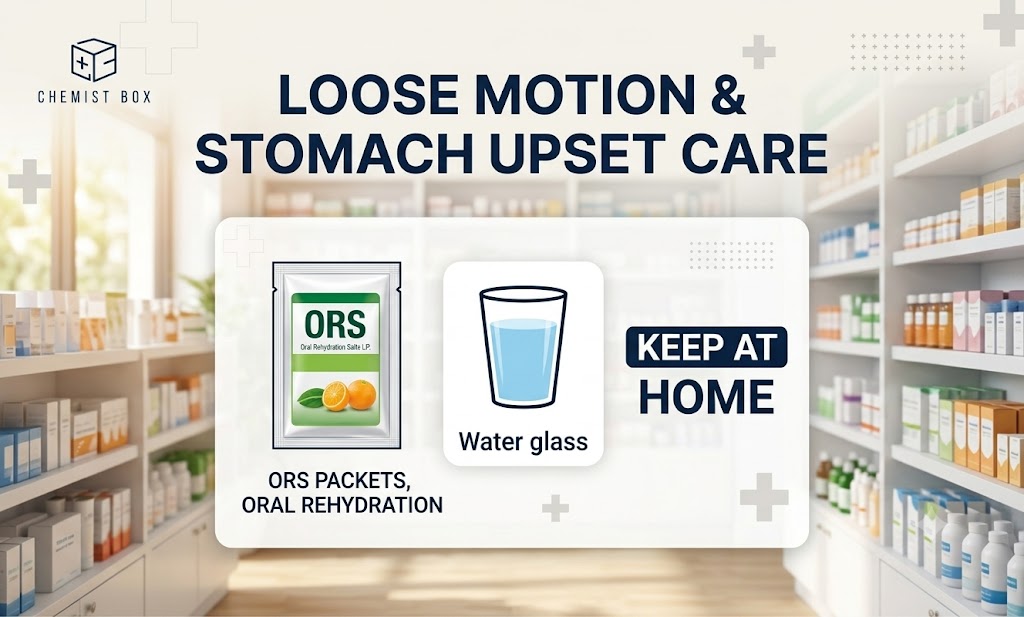
Loose Motion & Stomach Upset Care in Kankarbagh, Patna: ORS, Oral Rehydration & What to Keep at Home
Loose motion is one of those things every household deals with a few times a year, and almost everyone handles it slightly wrong.
The two most common mistakes are the same everywhere in Kankarbagh. The first is reaching straight for a tablet to stop it. The second is drinking only plain water, or a home-made sugar and salt mix guessed by eye, and assuming that covers the fluid loss.
Here is the thing worth understanding: in most cases of loose motion, the illness itself is not the danger. Dehydration is. Getting fluids and salts back into the body properly is what actually matters, and that is exactly what ORS is designed to do.
This guide covers how to use ORS correctly, what to eat and avoid, what to keep at home before you need it, and the danger signs where home care is no longer enough. Your Chemist Box store in Kankarbagh, Patna stocks everything mentioned here. One thing to say plainly: this is home care for a straightforward stomach upset, not a substitute for a doctor when the signs below appear.
What Causes It
Knowing roughly what you are dealing with helps you judge how careful to be.
Most short episodes are self-limiting. The job at home is keeping the person hydrated while it passes.
ORS: The Part Most People Get Wrong
ORS stands for oral rehydration solution. It contains a specific balance of salts and glucose, and that balance is not incidental. The glucose actively helps the body absorb the salt and water together, which is why ORS rehydrates far better than plain water does.
Plain water replaces the water but not the salts. In a heavy episode, that leaves the body short on electrolytes even though the person is drinking.
How to Make It Correctly
This is where most of the errors happen.
Wash your hands and use a clean container.
Use clean drinking water, boiled and cooled if there is any doubt about the supply.
Use the full sachet in the exact amount of water printed on the packet. Usually one litre, but check, because sachet sizes differ.
Do not use half a sachet in half a bottle by eye. Measure it.
Stir until fully dissolved.
Do not add sugar, salt, milk or juice to it. The balance is already set.
Use it within 24 hours and make a fresh batch after that. Keep it covered and cool.
Why Making It Too Strong Is Dangerous
Adding extra sachet, or less water than stated, produces a solution that is too concentrated. That pulls more water into the gut rather than replacing what is lost, which can make loose motions worse and dehydration worse with it. In small children this is genuinely risky.
Too dilute is less harmful but simply less effective. The printed instruction is the right one, so follow it exactly rather than adjusting for taste.
How to Drink It
Small sips, frequently. Gulping a large amount usually triggers vomiting.
After every loose stool, take some more, rather than waiting to feel thirsty.
If there is vomiting, wait about ten minutes, then restart with a spoonful every few minutes and build up slowly.
Keep going for as long as the loose motions continue, not just on the first day.
Cool it slightly if the taste is difficult, but do not sweeten it.
For Children
Give ORS after each loose stool, in small amounts using a spoon or cup rather than a bottle
Continue normal feeding alongside it, including breastfeeding, which should never be stopped during an episode
Watch nappies or toilet trips. Reduced urine is one of the earliest signs of dehydration
Zinc supplementation is recommended alongside ORS for children with loose motions, and is standard practice in India for reducing severity and duration. Ask your doctor or the pharmacist at your Chemist Box store about the right form and duration for your child's age
Do not give adult anti-diarrhoeal medicines to a child
Home-Made Alternatives, and Their Limits
When there is genuinely no ORS available, other fluids help: rice water, thin dal water, coconut water, buttermilk, and clear soups. These are all reasonable stopgaps.
The traditional sugar-salt-water mix is better than nothing, but it is not equivalent to ORS. Measured by eye, it is easy to make it too salty, which is harmful, particularly for a child. If you have to use it, follow the standard proportions carefully and switch to proper ORS as soon as you can get some.
This is exactly why a few sachets in the cupboard, bought before anyone is ill, are worth more than any remedy improvised at 11 pm.
Should You Take Something to Stop It?
The instinct is understandable, especially when you have work or travel. But it deserves care.
Loose motion is often the body clearing an infection out. Stopping the movement can keep the cause in the gut for longer.
Specifically, do not use anti-diarrhoeal medicines that slow the bowel if:
There is fever
There is blood or mucus in the stool
There is severe abdominal pain
The person is a child, unless a doctor has advised it
The person is elderly or frail, without asking first
For an adult with a simple, watery episode and no fever or blood, occasional short-term use may be appropriate, and the pharmacist can tell you whether it suits your situation. Even then, it is comfort, not treatment. Rehydration is the treatment.
Do Not Start Antibiotics on Your Own
Most stomach upsets are viral, and antibiotics do nothing for those. Taken casually they can also disturb gut bacteria and prolong the problem, and they contribute to antibiotic resistance, which is a serious issue in India. If antibiotics are needed, a doctor will decide that after assessing you.
What to Eat and What to Skip
The old advice to stop eating entirely has been largely abandoned. Eating supports recovery, as long as it is simple food.
Usually well tolerated:
Khichdi, plain rice, curd rice, dal water
Bananas, cooked apple, toast
Curd or buttermilk, which many people find settles things
Clear soups and thin dal
Boiled potato, plain roti
Better avoided for a few days:
Oily, fried and heavily spiced food
Milk in large quantities, since tolerance can dip temporarily after an episode
Raw salads, cut fruit and street food
Fizzy drinks and packaged fruit juices, which are too sugary and can worsen the problem
Caffeine and alcohol
Sugar-free products containing sorbitol or similar sweeteners, which loosen stools further
Return to normal food gradually over a couple of days rather than jumping straight back to a heavy meal.
Dehydration: What to Watch For
This is the part that decides whether home care is working.
Early Signs
Thirst and a dry mouth
Passing less urine than usual, and darker urine
Tiredness and mild lightheadedness
Reduced tears in a child
Signs to Act On Immediately
Take the person to a doctor or hospital straight away if there is:
Very little or no urine for many hours
Sunken eyes, or a sunken soft spot on a baby's head
No tears when a child cries
Extreme drowsiness, floppiness, confusion, or difficulty waking
Dizziness or fainting on standing
Cold, clammy or mottled skin, or a rapid pulse
Skin that stays pinched when gently lifted
Persistent vomiting where nothing stays down
Other Reasons to See a Doctor
Blood or mucus in the stool
High fever
Severe or persistent abdominal pain
Loose motions lasting more than two to three days in an adult, or more than a day in a young child
Recent travel, or symptoms after eating from a suspect source
Loose motions during or after an antibiotic course
Significant weight loss, or a change in bowel habit that keeps recurring
Who Needs Extra Caution
Babies and young children. Dehydration develops far faster than in adults. Any loose motion in an infant under six months, or a child who is not drinking, needs medical advice quickly. Continue breastfeeding throughout.
Elderly parents. They often do not feel thirsty and may show dehydration as confusion or weakness rather than a dry mouth. Offer fluids regularly rather than waiting for them to ask.
People with diabetes. Illness and reduced eating both disturb blood sugar control. Do not stop prescribed medicines on your own, monitor sugar more closely, and contact your doctor early for guidance.
People with kidney or heart conditions. Fluid and salt balance is more delicate here, so ask before using ORS freely.
Pregnancy. Get advice early rather than self-treating, and do not take anti-diarrhoeal or antibiotic medicines without a doctor.
Prevention: Mostly Boring, Mostly Effective
Drink boiled, filtered or properly treated water, especially in the monsoon
Wash hands with soap before eating and after using the toilet, which remains the single most effective measure
Avoid street ice, cut fruit and food that has been sitting out
Eat food hot and freshly cooked
Wash vegetables properly, particularly leafy ones
Keep raw and cooked food separate at home
Carry sanitiser and a couple of ORS sachets when travelling
What to Keep at Home Before You Need It
Check the expiry on ORS sachets occasionally. They sit in a drawer for years, which is exactly when you find they have lapsed.
Finding ORS and Stomach Care Products at a Chemist Box Store in Kankarbagh
Demand for ORS rises sharply in summer and through the monsoon, so buying a few sachets in advance is easier than finding them on a bad night.
Use the store locator on chemistbox.in. Enter your locality, city or pincode and you will see the Chemist Box stores near you with the full address, phone number, opening hours and a map link for directions.
Worth doing:
Buy ORS before the season, not during an episode
Say who it is for, since advice differs for a child, an elderly parent or someone pregnant
Ask about zinc if the person is a child
Mention any regular medicines, particularly diabetes, blood pressure and kidney-related ones, since illness affects how those are managed
Frequently Asked Questions
Is plain water enough for loose motion? Not on its own in a significant episode. Water replaces fluid but not the salts lost in the stool. ORS contains a specific balance of salts and glucose that helps the body absorb water and salt together, which makes it far more effective. Keep drinking water too, but use ORS as the main rehydration.
How do I mix ORS correctly? Use the full sachet in exactly the amount of clean water printed on the packet, and stir until it dissolves. Do not use part of a sachet by eye, do not reduce the water to make it taste stronger, and do not add sugar, salt, milk or juice. A solution that is too concentrated can worsen dehydration, which is a real risk in small children. Discard after 24 hours and make a fresh batch.
Should I take a tablet to stop loose motion? Often it is better not to, since the body may be clearing an infection. Avoid bowel-slowing medicines if there is fever, blood or mucus in the stool, or severe pain, and do not give them to children without a doctor. For a simple watery episode in an adult, ask the pharmacist whether short-term use is appropriate. Rehydration remains the actual treatment.
What should I eat during and after loose motion? Simple food helps recovery, so do not stop eating. Khichdi, plain rice, curd rice, dal water, bananas, toast and buttermilk are usually well tolerated. Avoid oily and spicy food, large amounts of milk, raw salads, fizzy drinks and packaged juices for a few days, and return to normal food gradually.
When should a child with loose motion see a doctor? Quickly if they are under six months, are not drinking, are unusually drowsy or floppy, have no tears when crying, sunken eyes, very little urine, blood in the stool, high fever, or persistent vomiting. Also see a doctor if it lasts more than a day in a young child. Continue breastfeeding throughout, and ask about zinc alongside ORS.
Can I use a home-made sugar and salt solution instead of ORS? Only as a stopgap when nothing else is available. Measured by eye it is easy to make it too salty, which is harmful, particularly for children. Proper ORS sachets have the balance already set, which is why keeping a few at home in advance is worth doing.
Conclusion
For most stomach upsets, the answer is simpler than people expect. Replace what is being lost, using properly mixed ORS in small frequent sips. Keep eating simple food. Skip the instinct to stop the motions with a tablet, especially where there is fever or blood. Watch the person, not just the symptom, because reduced urine and drowsiness matter far more than how many trips to the bathroom they have made.
The preparation part takes one visit. A few ORS sachets and a thermometer in the cupboard, bought before anyone is unwell, turn a difficult night into a manageable one.
Use the store locator on chemistbox.in to find the Chemist Box store nearest you in Kankarbagh, Patna, keep a few ORS sachets at home before you need them, and ask the pharmacist what suits your family, especially if there is a young child or an elderly parent at home.